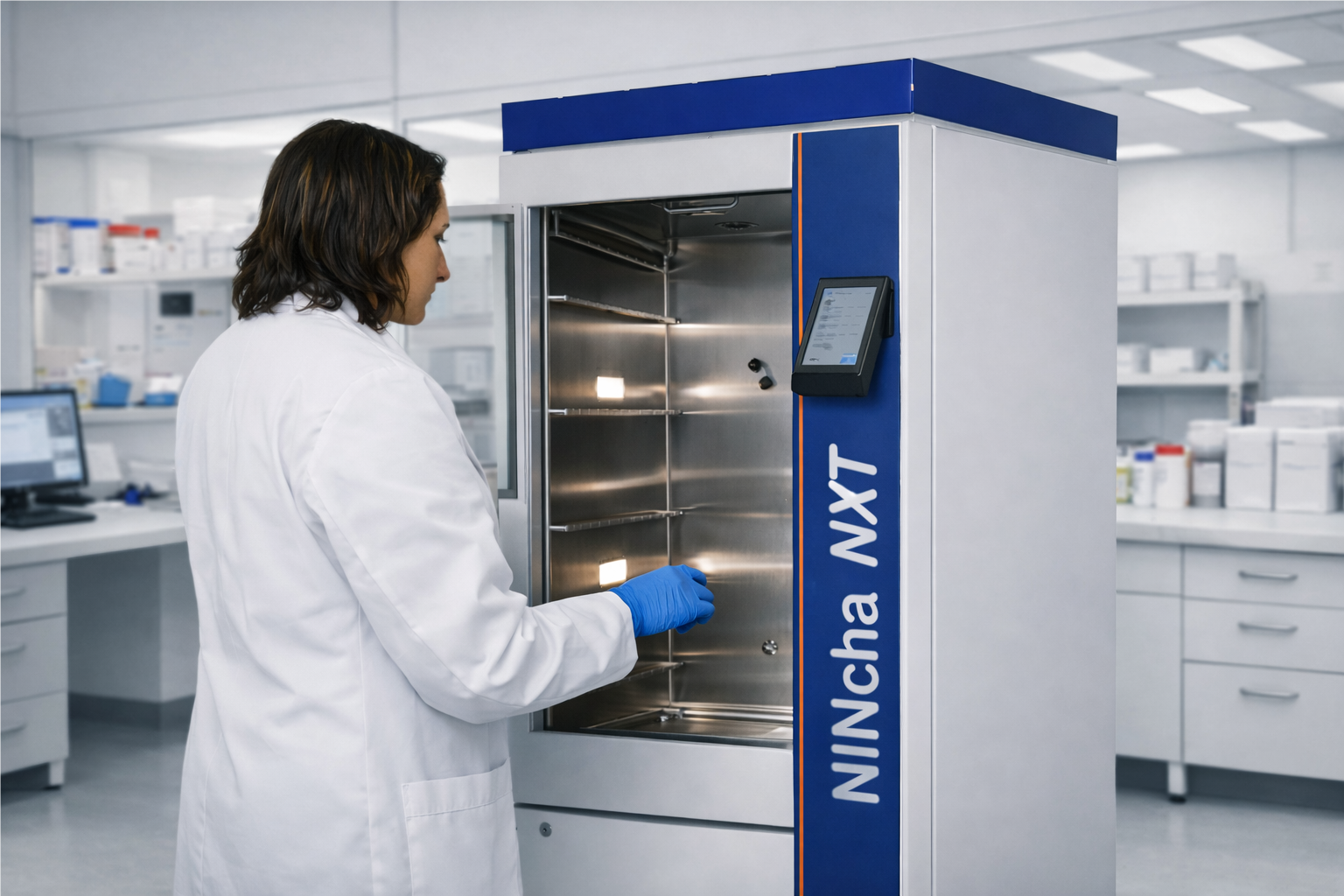
NINcha NXT Ninhydrin / Indandione / DFO Development cabinets

Price On Application

The Benchmark Reinvented

For decades, NINcha has been the reference system worldwide for the development of Ninhydrin-, DFO- and Indandione‑treated fingerprint evidence. Trusted by leading forensic laboratories, it set the standard for reliability, repeatability and high‑contrast results. Now, the next generation of NINcha continues this legacy — faster, smarter, and more intuitive than ever.

The NINcha series is a family of forensic climate chambers specifically designed for the development of fingerprints on porous surfaces.

User-programmable cycles, simple operation, and ISO 17025-compliant process data acquisition offer Ninhydrin, DFO & Indandione fingerprint development that is unmatched in the market.

With over 1000+ units sold worldwide the NINcha is a popular, trusted and validated system used extensively, with many police forces in the UK and Ireland also adopting this system.  The system operates in accordance to the UK’s Fingerprint Visualisation Manual (FVM) directives set by CAST/DSTL.

With the NINcha series, Attestor Forensics offers three different sizes of climate chambers, the benchtop model NINcha S32 and two larger floor standing models NINcha M32 and NINcha L32, all of which with in built automatic pre-programmed cycles for the development of chemically treated fingerprints with either Ninhydrin, DFO or Indandione.


Features

  • Fast fingerprint processing with high workflow rates Recovery times in less than 5 minutes for Ninhydrin, DFO and Indandione (S31 model). Operates within the UK FVM requirements at 80 Celsius and 62 % RH for NIN development.
  • Pre-Programmed Treatment Cycles for Ninhydrin, DFO and Indandione ensure simple operation and consistently high quality of evidence development. Parameters and timers can be adjusted by a user to his demands. In addition a manual mode is available which can be used to treat high thermal mass objects but is also aimed to future proof the cabinet so if any new chemical treatment process is approved in the future the manual mode can be set to a user specific T and RH value for this specific process.
  • Anti Condensation design  Highly insulated chamber prevent water condensation during the development cycle eliminating evidence damage.
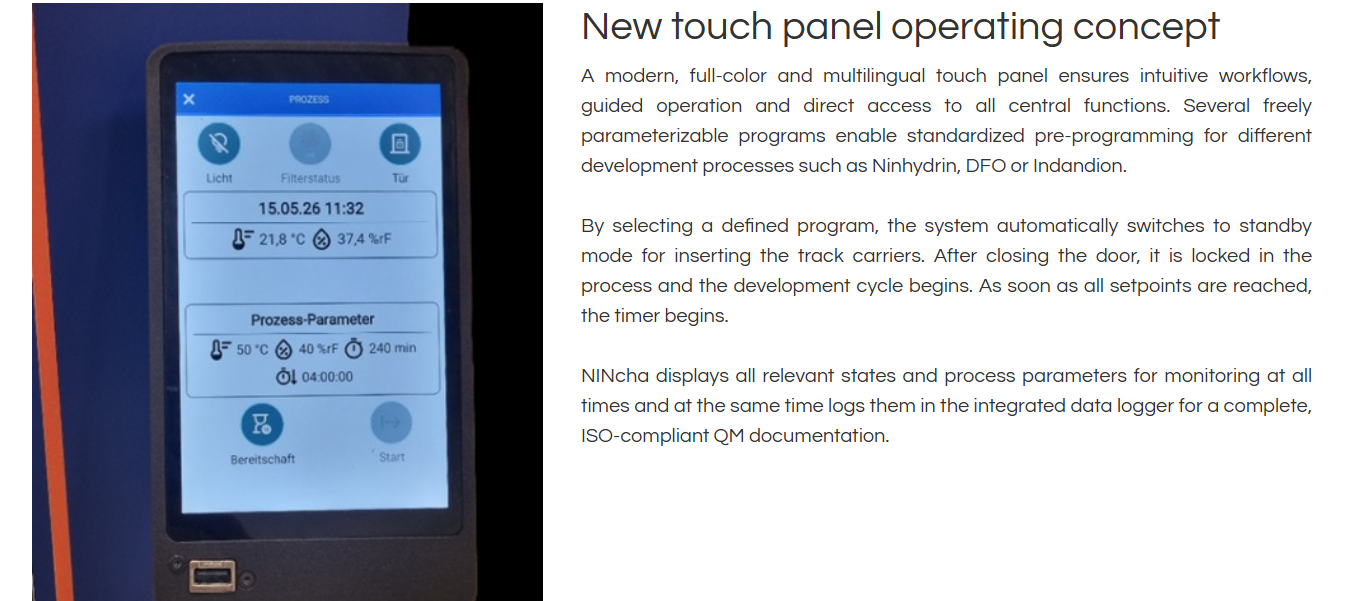
  • Brand new multilingual touch panel provides clear workflows, guided operation, and instant access to all key functions. All key parameters are automatically recorded by the data logger, supporting quality management documentation.
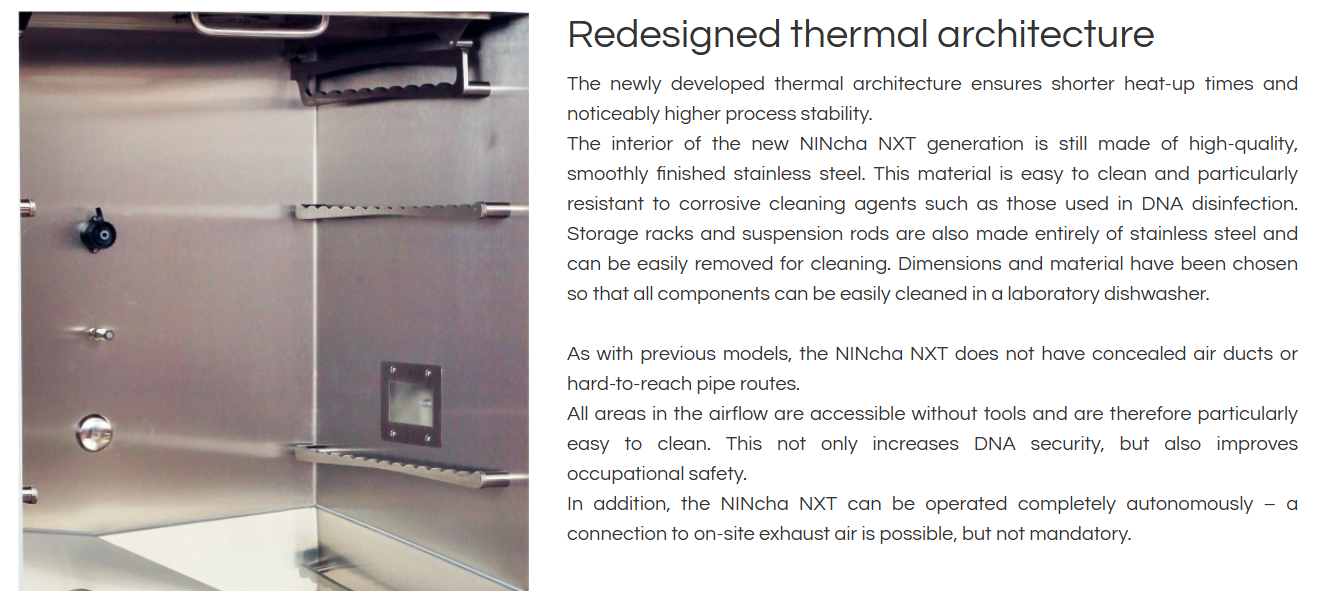
  • Redesigned thermal architecture ensures significantly improved process stability. Dual top and bottom heating system providing significantly faster system readiness and recovery times.
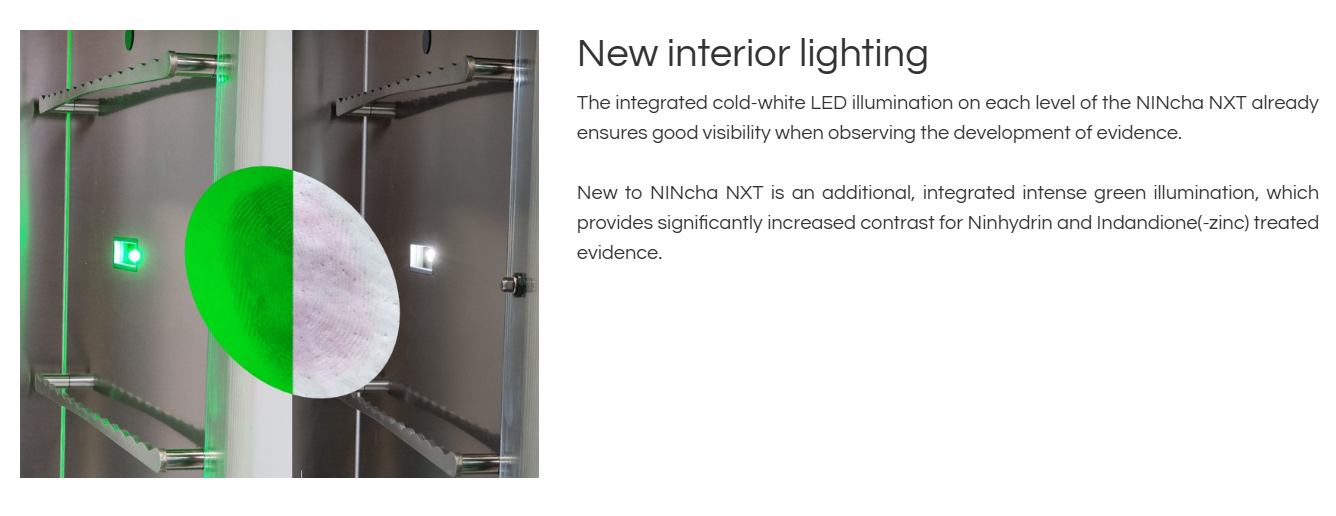
  • High-contrast lighting Integrated cold-white LEDs ensure optimum visibility, switchable to intense green lighting for exceptionally high contrast for evidence treated with Ninhydrin or Indandione(-Zinc).
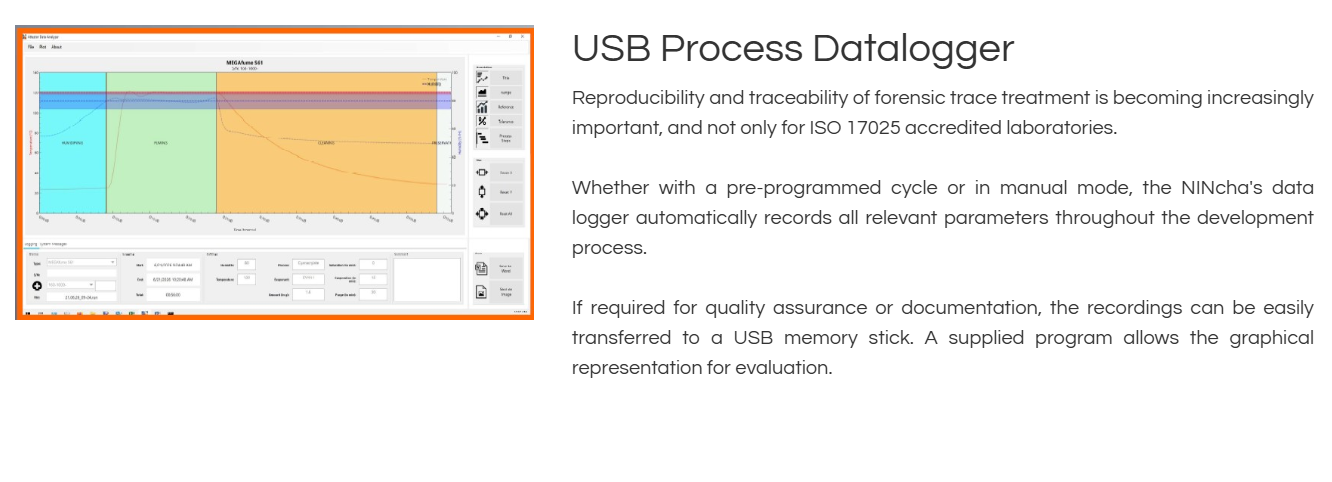
  • USB Data Logger  Records date, time, temperature and humidity settings in 30 second intervals.  Data can be plotted graphically with software provided.
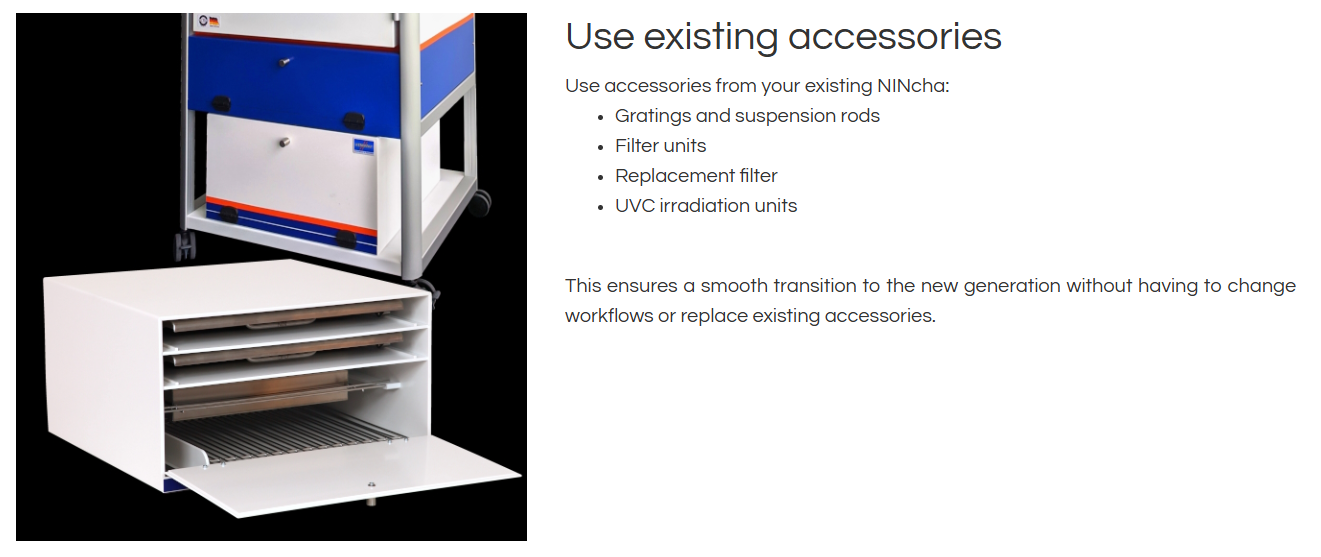
  • Variable Shelving Concept The carriers on the inner sides of the chamber are suitable for the usage with easy to clean metal grills and hanging rods.
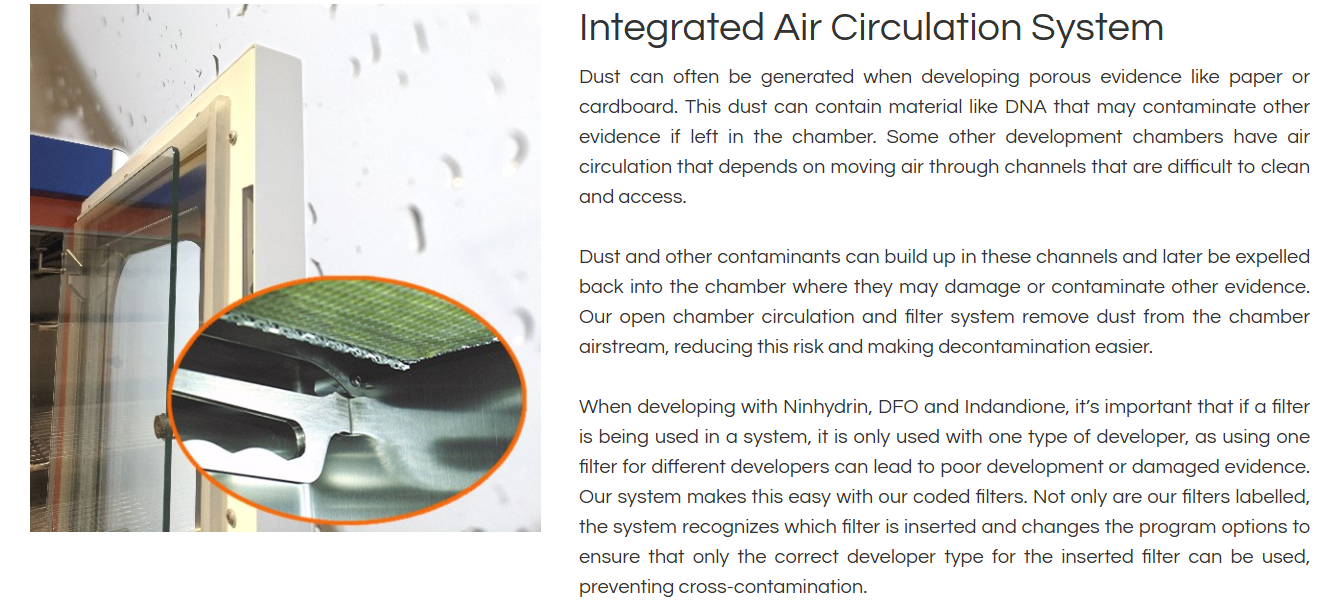
  • Air Filter and External Ventilation In order to limit cross-contamination and reduce the cleaning requirements, a special air filter system has been integrated into the cabinet to clean out chemical loaded evidence abrasion particles or dust. The filters are coded to prevent the use of Ninhydrin, DFO or Indandione filter units with the wrong process. Alternatively or additionally, the cabinet can be upgraded for external ventilation with process controlled air inflow and exhaust valves.
  • UV-Decontamination Unit For easy elimination of DNA inside the cabinet, a short wave UV illumination unit can be fitted. The control system automatically detects, when the unit is placed inside.
  • Water Supply and Drainage  Integrated into the cabinet is a tank for distilled water as well as a container for accumulated condensed water. The touch panel display informs the user about a due re-fill or drainage.  This makes the NINcha not reliant on water plumbing and therefore can be used any where in the laboratory provided there is access to mains power.
  • Deflagration Protection  A novel locking mechanism for the door prevents too high pressure inside the cabinet, built up e.g. by steam pressure to escape for increased user safety. The door opens to the right by default. On request it can also be offered with hinges on the left side.
  • Easy clean design  The innovative design makes the cleaning and maintenance of the NINcha system very simple
  • Clear visibility on the evidence at all times   The unique design prevents condensation build up on the window allowing the user to monitor the development process at all times
  • Low cost of ownership The system is very simple and easy to maintain.  The system is built from durable stainless steel which will not rust and provide many years of operation. Annual calibration costs are also very low.
  • Serviced, maintained and ISO17025 calibrated from our UK trained staff  With any core lab equipment maintenance and optimal performance is critical.  Our trained UK staff provide on site support, service and ISO17025 traceable calibration services.

Additional Information
 

Options

3 sizes are available in the following dimensions:

  • NINcha NXT S32 – 105 x 72 x 87 cm (on adjustable feet)
  • NINcha NXT M32 – 189 x 72 x 87 cm (on height adjustable & lockable castors)
  • NINcha NXT L32 – 207 x 72 x 87 cm (on height adjustable & lockable castors)


Frequently asked questions

How do I clean the NINcha interior?

During the development process, dust can be created by evidence and settle on the interior surface of climate chambers. NINcha reduces this dust with a specialized filter system (Ninhydrin filter is included with a standard order, but additional optional filters for IND and DFO are also available).

In addition to using the filter system to reduce dust, the chamber interior should still be frequently cleaned to prevent DNA contamination. The stainless steel and glass interior of the chamber can be wiped with a damp microfiber cloth, or a mild water and soap solution. It can also be wiped or sprayed with an alcohol or peroxide solution for DNA decontamination.


How often should I refill the distilled water reservoir and how do I refill it?

Each NINcha has an internal integrated reservoir sized according to the chamber size. This reservoir must be refilled only with demineralized water to prevent mineral buildup from clogging the system.

How often the reservoir will need to be refilled will be dependent on how often the system it is used and how it is used, as different cycles will use more water. Cycles with more evidence and settings that require higher humidity levels will use more water than cycles with less evidence and lower humidity levels. Temperature can also affect the amount of water used.

The unit will indicate when water levels are low and when to refill the reservoir. The reservoir can be refilled using the reservoir suction hose located behind the front panel of the unit, below the door to the chamber. The suction hose has a shutoff valve and debris filter and should still only be used with clean filtered water.

When the hose is inserted into a container of fresh water for the reservoir and the valve is opened, users can select the option on the display to automatically begin refilling the reservoir. The reservoir will continue to fill until it reaches the maximum fill level, at which point it will shut off the suction. The hose valve can then be closed and the hose can be stowed back in the storage space behind the access panel.


How long will the parameters in my cabinet take to reach their setpoints, and how long will it take to return to the setpoints once I open the door?

There is no set time for this, as the amount of time required will depend highly on the setpoints selected and ambient conditions. In general, it will take longer to reach higher temperature and humidity levels. This time may be shorter if ambient temperature and humidity are higher.

The NINcha was designed specifically to avoid dramatic overshooting or instability around setpoints in order to prevent damage to evidence or unpredictable development. Climate chambers that have poor accuracy and display frequent overshooting behaviour can develop condensation in the chamber and can result in poor evidence development and clarity, especially in cases where the evidence is exposed to conditions over 85°C and 80% rH.

Units that heat and humidify quickly have a tendency to overshoot. We at Attestor have worked closely with customers to develop a chamber that has steadier and more predictable changes in parameters to prevent problems like this and ensure that the NINcha units do not exceed critical levels of temperature or humidity that could damage evidence, while still providing a climate chamber that reaches setpoints in a reasonable amount of time to not hamper typical laboratory operation.

Downloads

Click here to view and download the datasheet

Subscribe to our mailing list

© 2026 ForenteQ Ltd. All rights reserved.
Company No. 9723053. Registered Address: Pure Offices, Lake View House, Wilton Drive, Warwick CV34 6RG, United Kingdom

Quality Policy | ISO9001:2015 Quality Certificate | Privacy Policy | Cookie Policy | Equality and Diversity Policy | Environmental Policy | Modern Day Slavery Statement